
In the outsourcing of metal components, the projects that go wrong at the mass-production stage are usually the ones where two requirements stack on top of each other: the alignment precision and batch-to-batch consistency of a drawn part, and the yield rate when a single component has to carry more than one surface-treatment process. Recently we completed a highly representative case for an overseas industrial client — a metal component that is first processed through sheet metal fabrication and then formed by drawing. It required custom tooling, and its surface had to be baking-painted overall while specific areas needed dip coating.
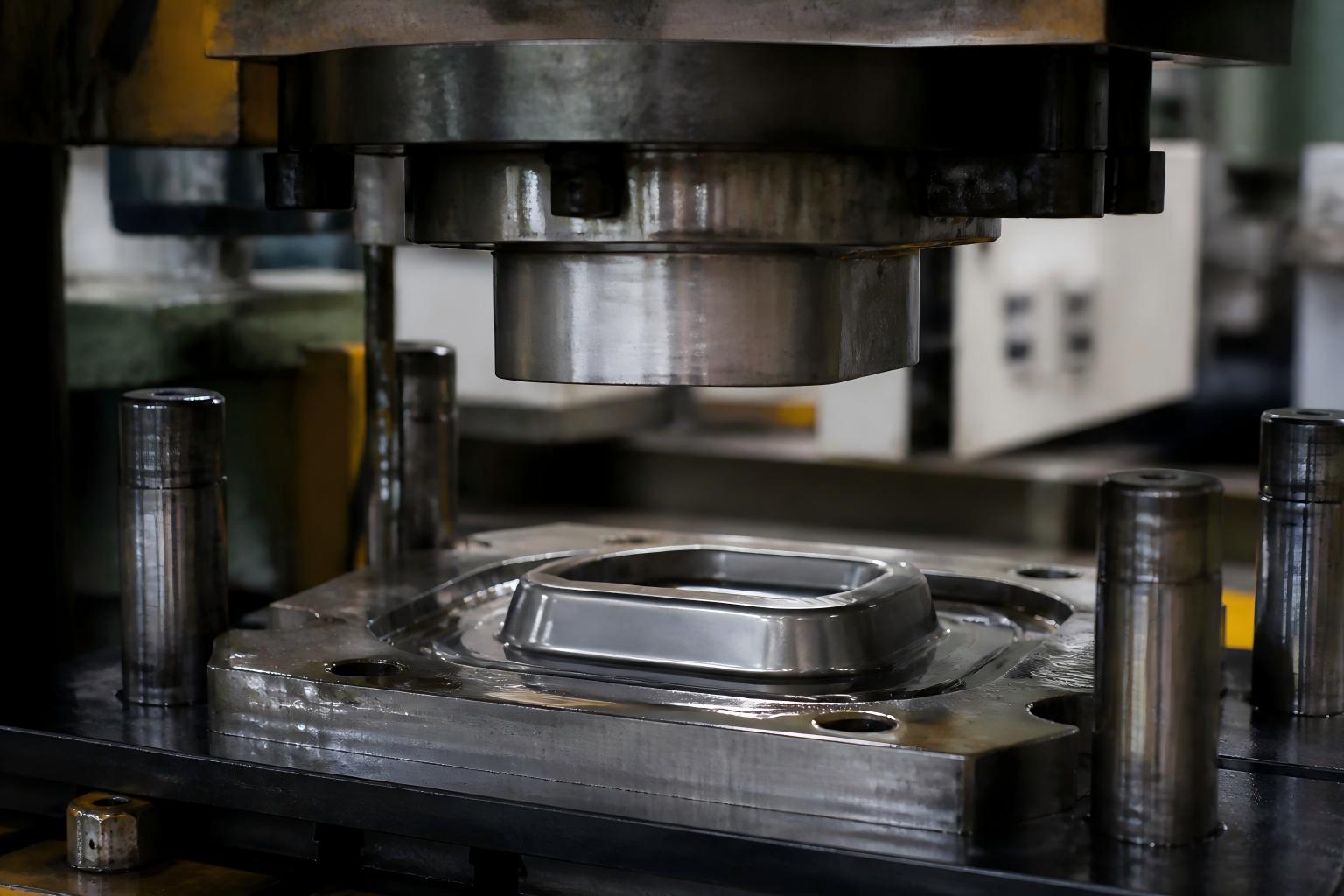
The component looks simple, yet it placed three requirements on the manufacturing side at the same time:
First, the consistency of drawing. The blank is drawn from flat sheet metal, and the curved transitions must not wrinkle, tear, or spring back — otherwise gaps appear at assembly.
Second, alignment precision. How the blank is seated in the tooling directly determines the symmetry of the forming. Once alignment drifts, every downstream process multiplies the error.
Third, the dual surface finish. The product needs baking paint overall for a uniform, weather-resistant appearance, while specific areas must be dip-coated to build a thicker protective layer for wear resistance, insulation, or grip.
What the client had run into at their previous supplier was exactly this combination: batch-to-batch dimensional drift on the formed parts, and color differences and missed coating where the baking paint met the dip coating.
We have always believed that 80% of a drawn part's quality problems are decided at the tooling-design stage. So the first step of this project was not production — it was opening the tools.
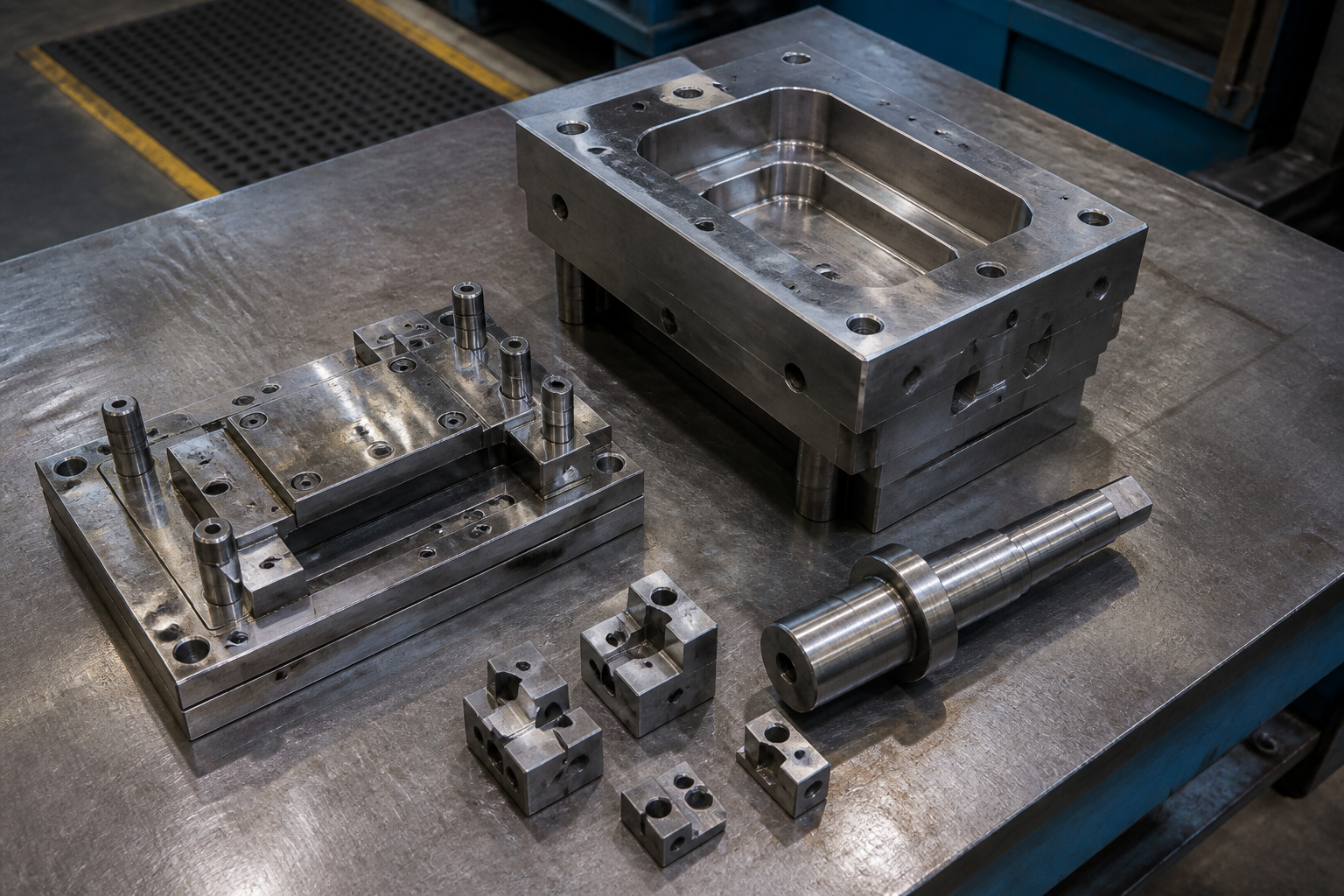
For this component, we designed and built a complete custom tooling set, whose core components include:
Drawing die |
Governs material flow and the forming profile, controlling the draw ratio to avoid wrinkling and tearing. |
Punch |
Works with the drawing die to deliver stable, reliable forming pressure. |
Lower-die forming swing block |
Performs local flipping and sizing at the end of forming, so complex curved surfaces transition more smoothly. |
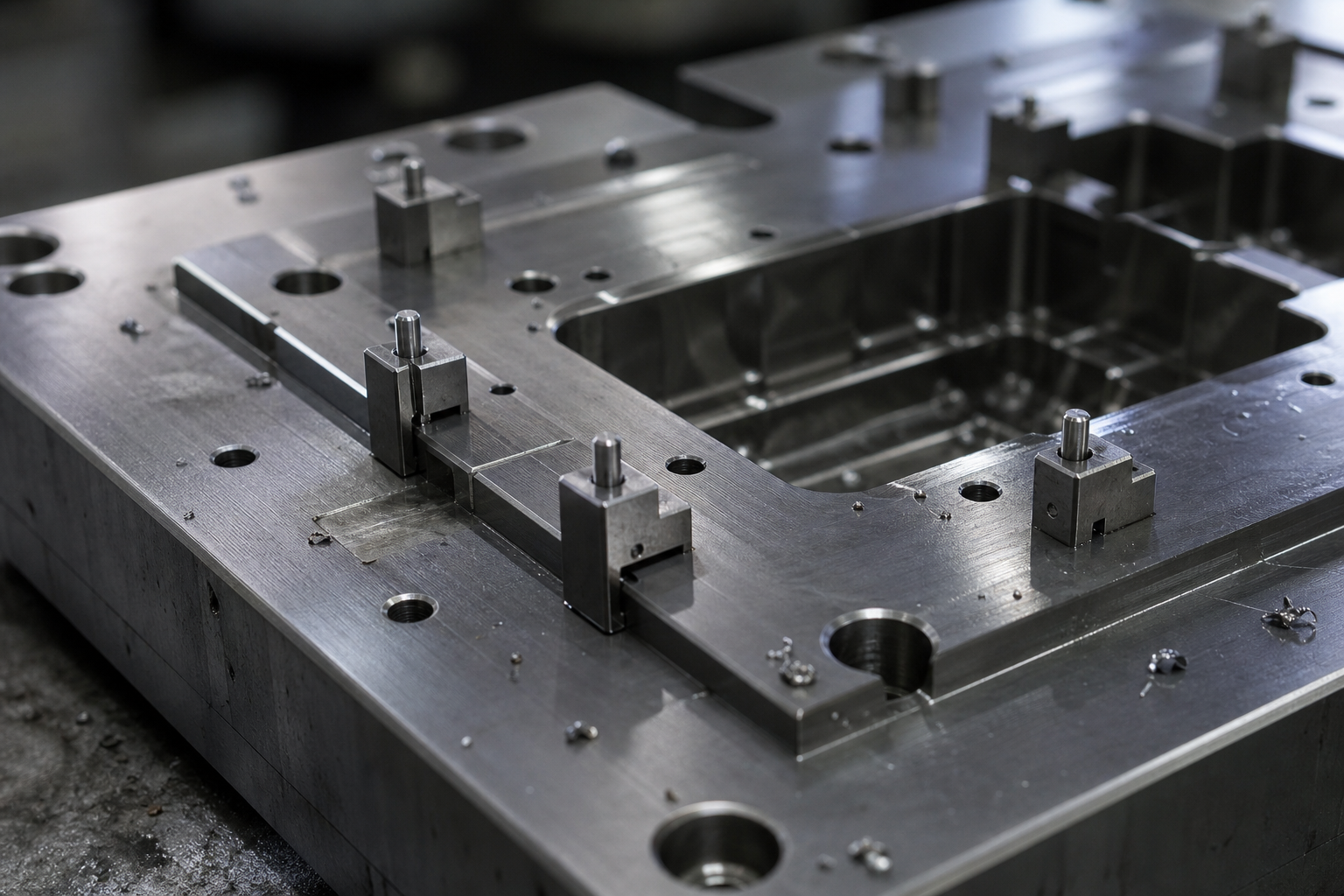
Lower-die milled alignment |
A datum machined directly into the lower die, so the blank seats identically every time. |
Four additional alignment points |
A reinforcement designed specifically around the client's pain point. By adding four locating points at critical positions, we compress the blank's displacement into a much smaller range, solving batch-to-batch consistency at its root. |
The value of this tooling is not that it “can form” — it is that it forms identically every single time.
Once forming passed, the second challenge was surface treatment.
We used a baking-paint-first, dip-coating-second process path: the overall baking paint ensures appearance and weather resistance, while local dip coating builds a thicker plastic protective layer in the specified areas.
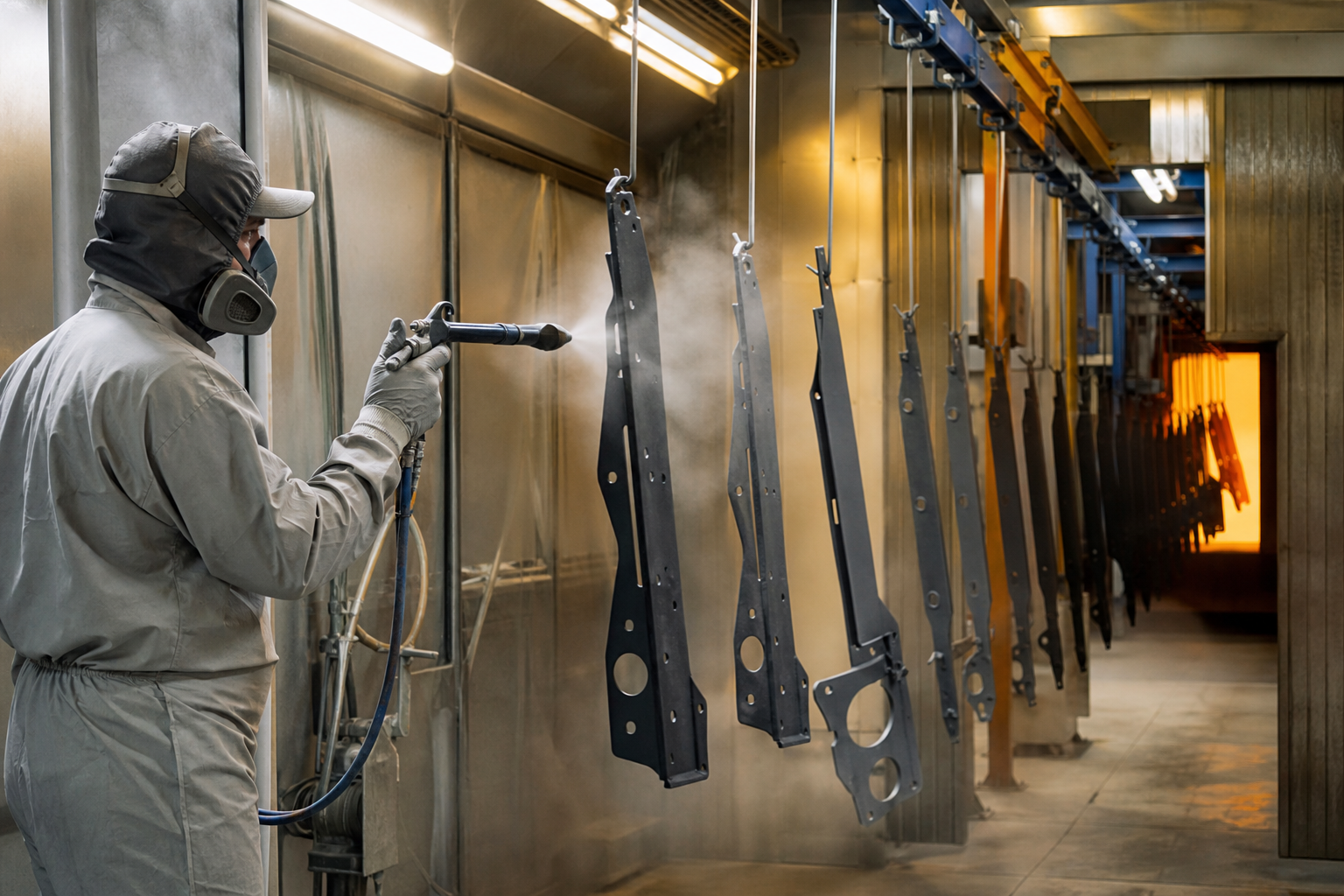
The real difficulty lies at the boundary between the two processes. To handle it, we use masking fixtures to precisely define the dip-coated areas, and we run adhesion tests and coating-thickness sampling on every batch — ensuring the baking-paint areas do not sag, the dip-coated areas do not bleed over the edge, and the joint between the two finishes does not peel.
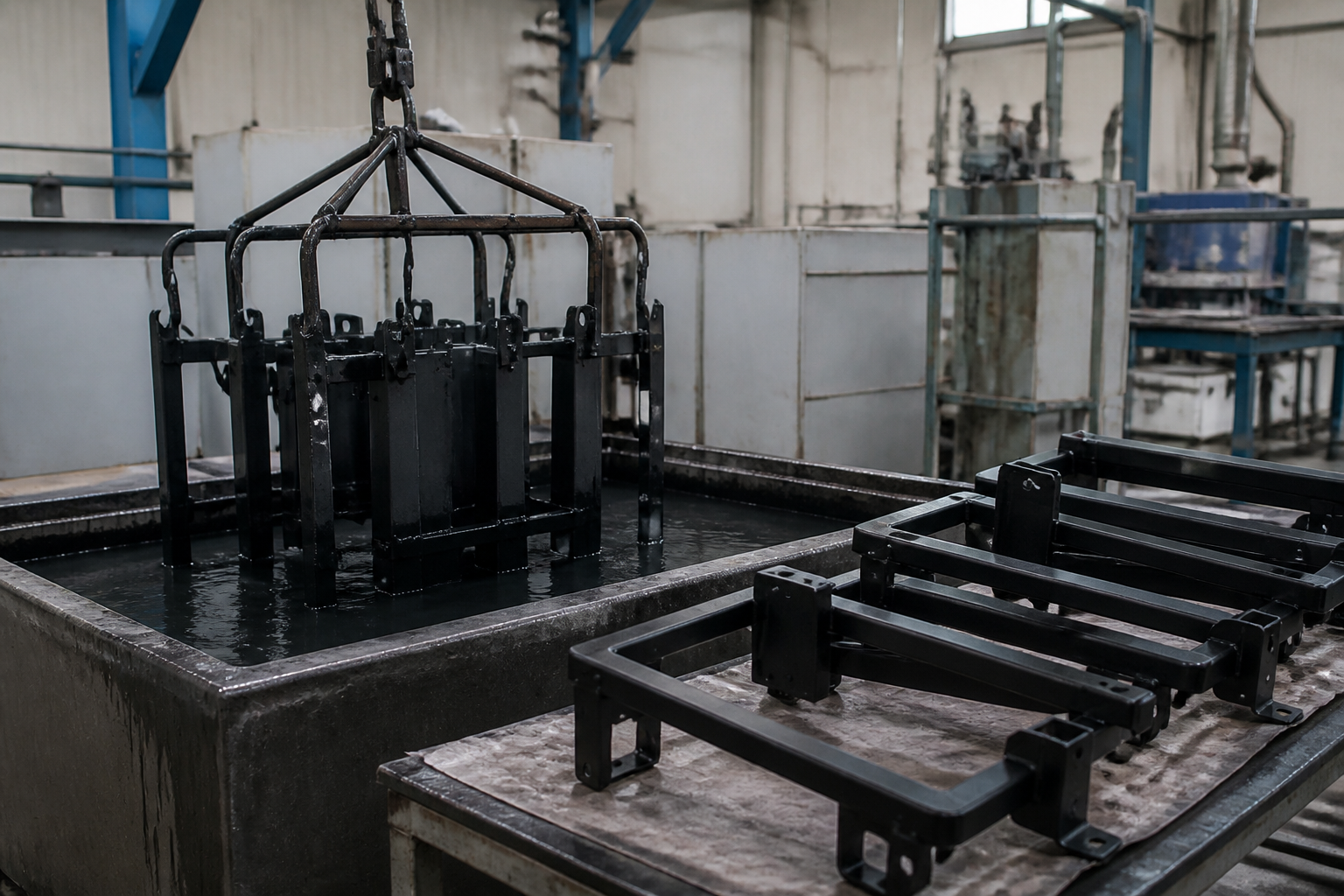
The project delivered: formed parts that are dimensionally stable from batch to batch and pass assembly on the first try; a clean boundary between baking paint and dip coating with no color difference and no missed coating; and a complete custom tooling set fixed for the client, so repeat orders only need a production restart — no re-sampling.
We focus on sheet metal fabrication and drawing of metal components, with supporting surface-treatment processes including baking paint, dip coating, spray coating, and electroplating. If your product involves both complex forming alignment and multiple surface processes, send us your drawing or sample — we would rather solve the mass-production problems early, at the tooling stage.

Copyright © 2024 by Xiamen Tongchengjianhui Industry & Trade Co., Ltd. - Privacy policy
