
A projector or electronic device is placed on the exhibition stand. Before the user even turns it on, the first impression has already been formed -
Are the seams of the casing uniform? Is the paint surface smooth? Are the corners sharp? Are the ventilation holes exquisite?
These questions may seem like details of the appearance, but in fact, they reflect the comprehensive capabilities of structural design, processing accuracy, and surface treatment. More importantly, the casing also undertakes core functions such as heat dissipation, electromagnetic shielding, and structural strength.
So the question arises: Should the instrument casing be made by bending sheet metal or extruding aluminum?
The answer is not a binary choice; rather, it depends on your product stage and requirements. And our value lies in: Both processes can be carried out, and surface treatments such as spraying, sandblasting, and oxidation can be completed in one step.
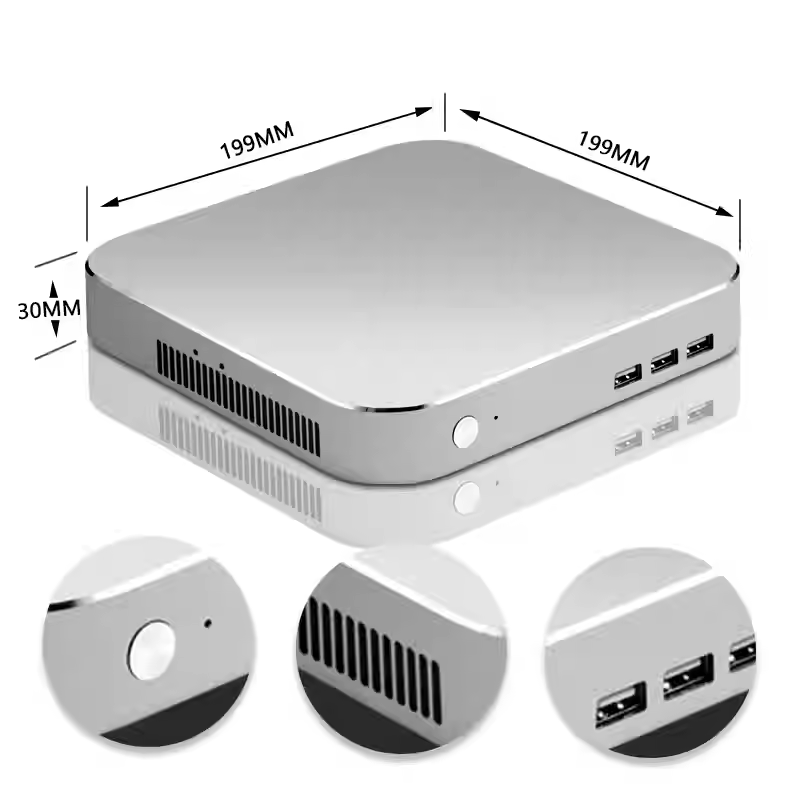
Let me quickly help you determine: Which manufacturing process is your casing suitable for?
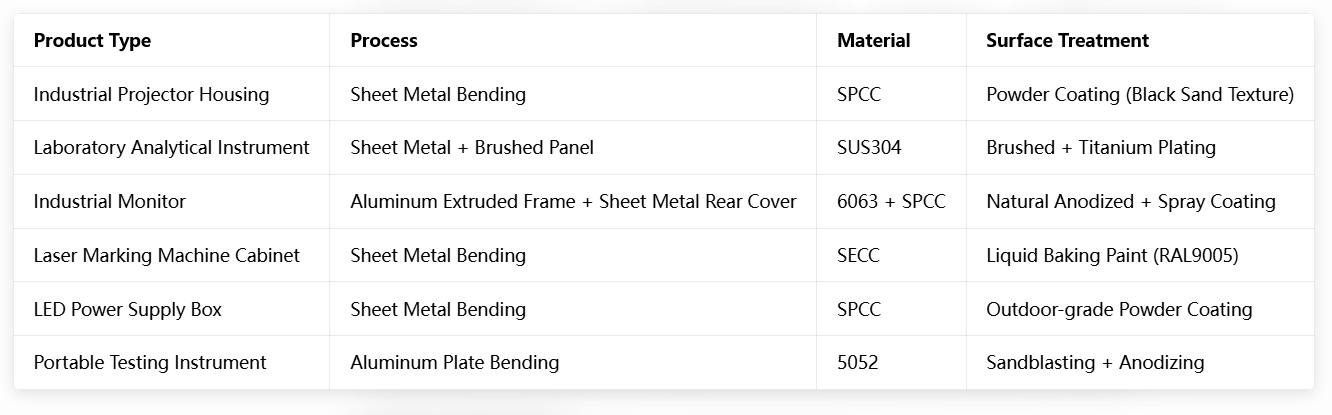
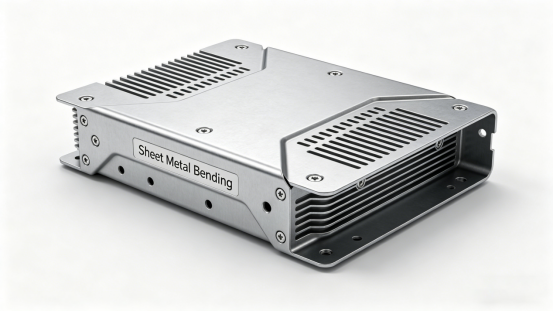
Solution 1: Sheet metal bending for the enclosure - Capable of handling complex structures flexibly
This is the most commonly used process route for the instrument casing, and it is particularly suitable for small and medium batch, multi-variety, and structurally complex projects.
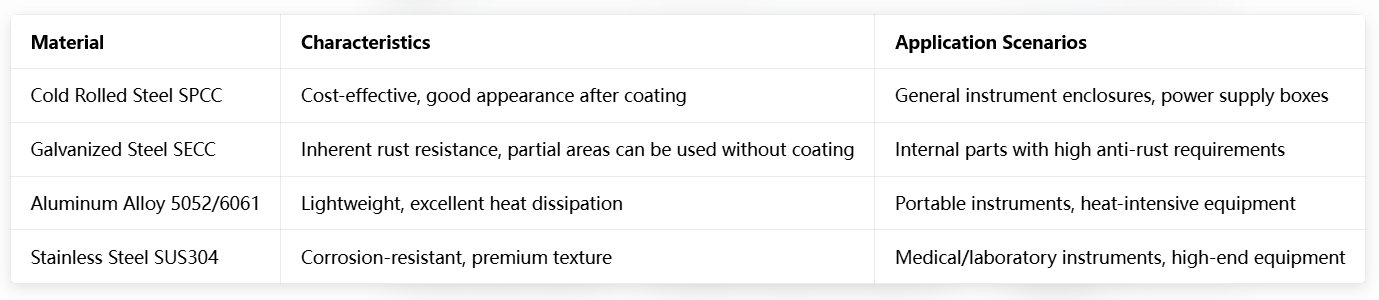
Common materials
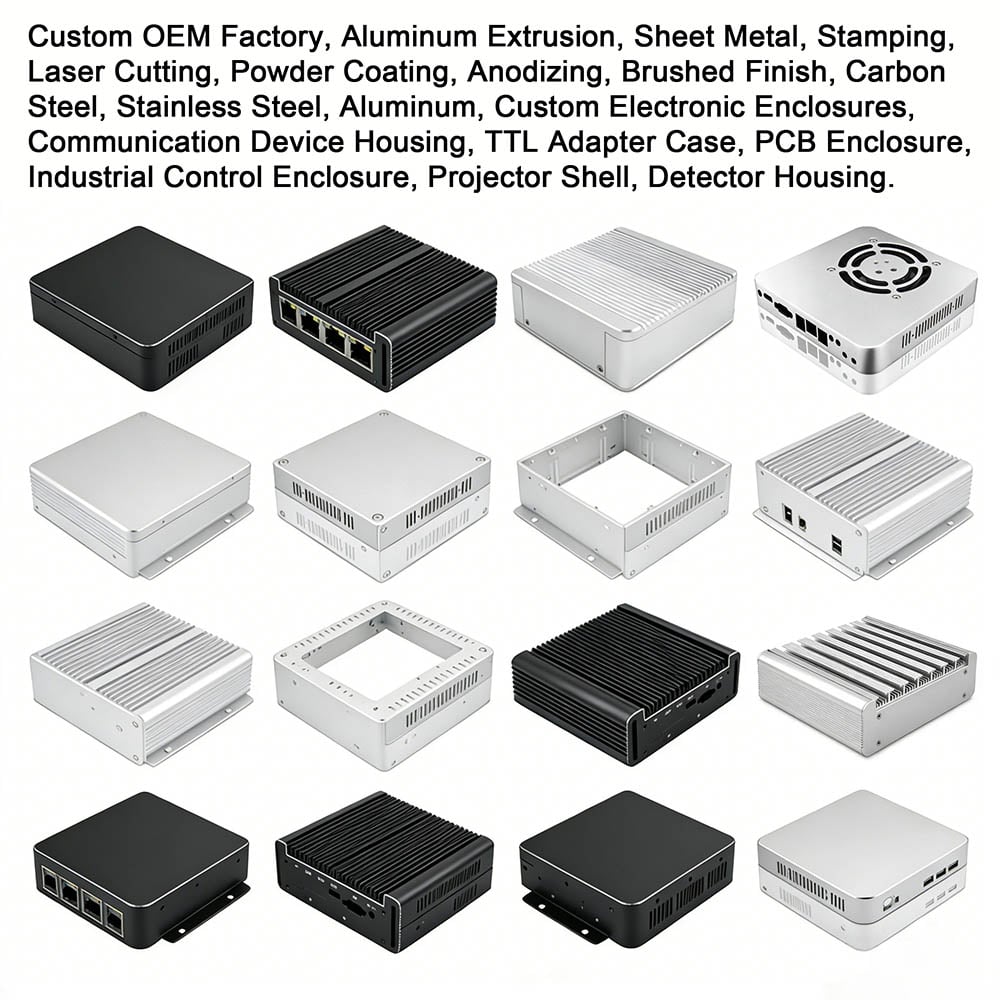
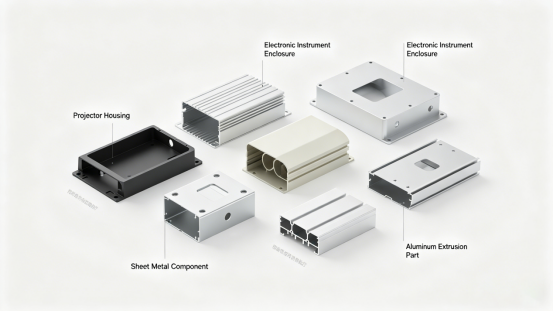
Key points of the structural design for the instrument casing (we will review it for you) Heat dissipation openings:
Arrayed circular holes / rectangular holes / louvers, balancing ventilation and electromagnetic shieldingInterface openings: Precisely positioned USB, HDMI, power, network port and other opening positions correspond to the PCB board
Stiffeners: Large-area thin plates with added stiffeners to prevent deformation upon pressing
Installation structure: Press rivets / screws, slots, rails, facilitating the fixation of internal modules
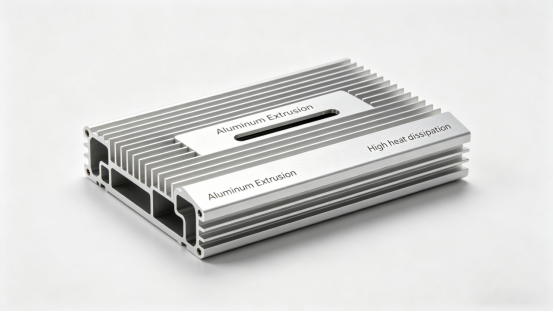
Option Two: Aluminum extrusion shell - The optimal solution for heat dissipation and lightweightingOption Two: Aluminum extrusion shell - The optimal solution for heat dissipation and lightweighting
If your instrument requires a long rectangular casing, a large number of heat dissipation fins, or a need for profiles as the structural framework, aluminum extrusion is a better choice.If your instrument requires a long rectangular casing, a large number of heat dissipation fins, or a need for profiles as the structural framework, aluminum extrusion is a better choice.
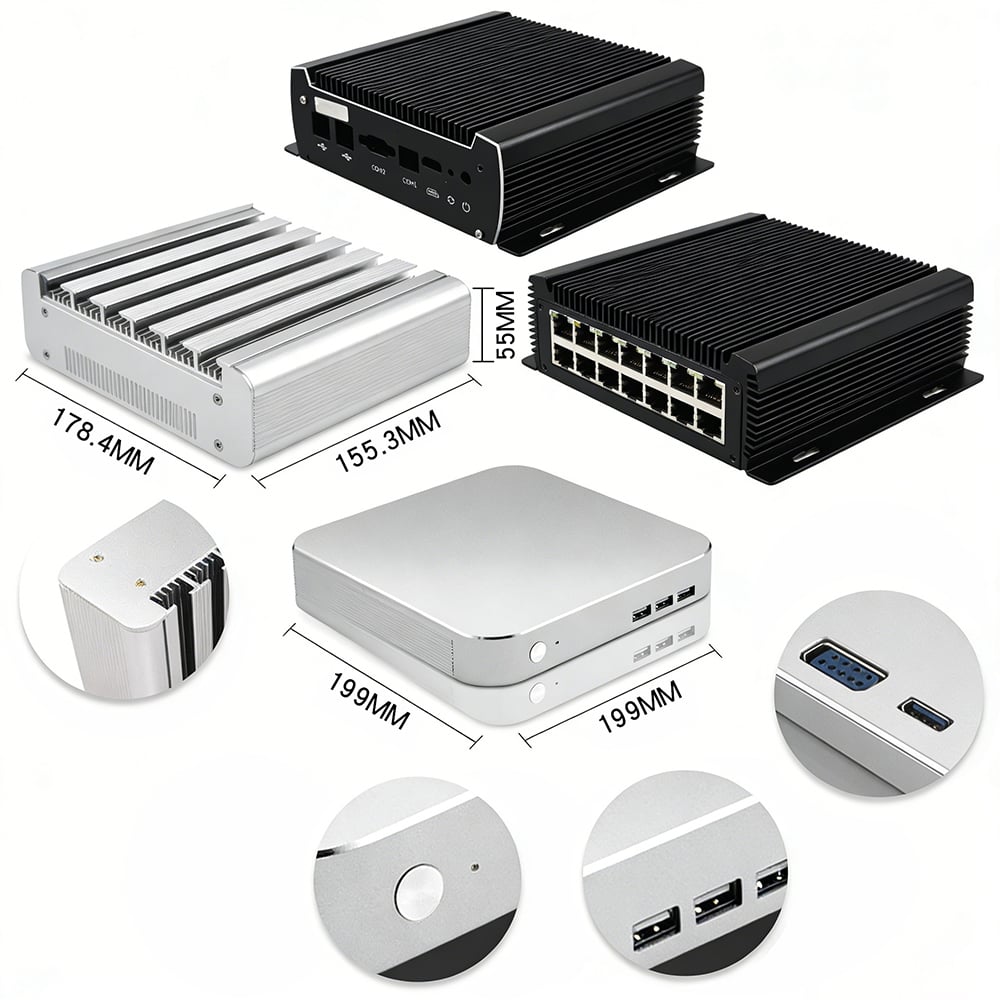
Why are projectors and instruments suitable for aluminum extrusion?
The radiator is integrally formed with the housing: no need for additional assembly of the heat sink, reducing the number of components
Constant cross-section, easy for expansion: the same cross-section can be cut to any length, suitable for serialized products
Light weight, high strength: the aluminum density is only 1/3 of steel, with excellent strength
Good electromagnetic shielding performance: the aluminum material itself has a good shielding effect
Our compressive strength
Common alloys: 6063-T5 (smooth surface, good extrusion property, suitable for the majority of instrument casings)
Molding cycle: First sample available in 2-3 weeks (special sections)
Length range: 50mm - 6000mm, arbitrary cutting
Post-processing: CNC drilling, tapping, slotting, chamfering, fine finishing of end face
Typical compression section characteristics
Internal card slot: Used for fixing the PCB board or the rail
Heat dissipation fins: Increase the heat dissipation area and control the temperature rise
Panel mounting slot: Facilitates embedding the front panel or the rear panel
Wall-mounted/installation slide slot: Facilitates equipment fixation
Surface treatment: The "last mile" of appearance
Whether you choose sheet metal or extrusion, surface treatment is the key factor determining the final texture of the shell. We offer a full range of surface treatments, completing the process in one step.
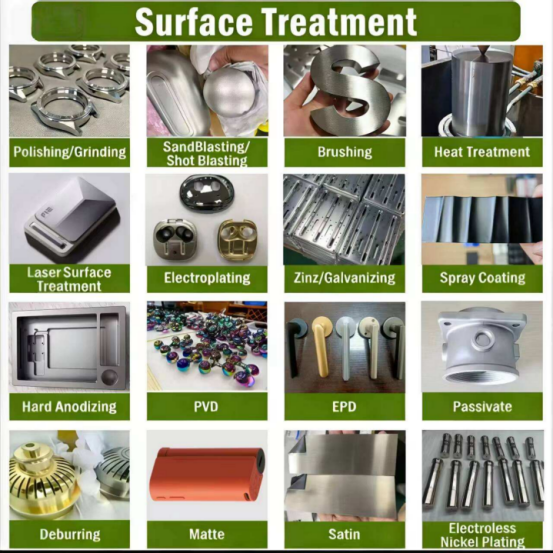
Spraying (painting / powder coating) - The most commonly used method, suitable for iron and aluminum components
Pre-treatment (necessary for determining adhesion, cannot be omitted):
Iron parts: Degreasing → Water washing → Silane/phosphating
Aluminum parts: Degreasing → Water washing → Chroming/Non-chrome passivation
Spraying process:

Wire polishing treatment - The exclusive texture of stainless steel/aluminum plates
Anodizing - Professional treatment for aluminum parts
Original color / black / other colors
Film thickness: 10-25 μm (ordinary anodizing) / 30-50 μm (hard anodizing)
Applicable to: aluminum extrusion casings, aluminum plate bent casings Electroplating - Decoration and protection for stainless steel / iron parts Chromium plating (bright chrome / matte chrome) Nickel plating
Titanium plating (titanium gold / rose gold / black titanium)
Screen printing / laser marking: Logo, product model, interface identification, scale lines Colors available (black / white / red / blue, etc.)
Quality Control: Structural Precision + Appearance Consistency
The requirements for the quality of the instrument shell have two aspects: the size must be accurate and the appearance must be consistent.
Size Precision Control
Bent parts: Angle ± 0.5°, Hole Position ± 0.1mm
Extruded parts: Sectional Dimension ± 0.1mm, Straightness ≤ 0.05mm/300mm
Testing Tools: Tri-coordinate Measuring Instrument, Angle Ruler, Marble Platform + Micrometer Appearance Consistency Control
Before Spraying: The jig design ensures that the angle of each product on the spraying line is consistent
During Spraying: Spot-check with Thickness Gauge, adjust spray gun parameters
After Spraying: Full inspection under standard light source (check run-off, orange spots, particles, underpainting, color difference)
Batch Color Difference: Leave samples for comparison to ensure the color is consistent across different batches
Available Reports
Material Certificate
Size Inspection Report
Thickness Report
Grid Test Report
Salt Spray Test Report (issued upon customer request)
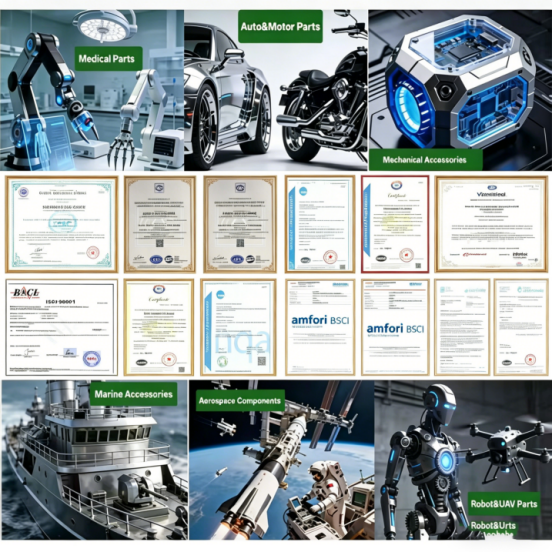
These instrument casings have been manufactured by us.
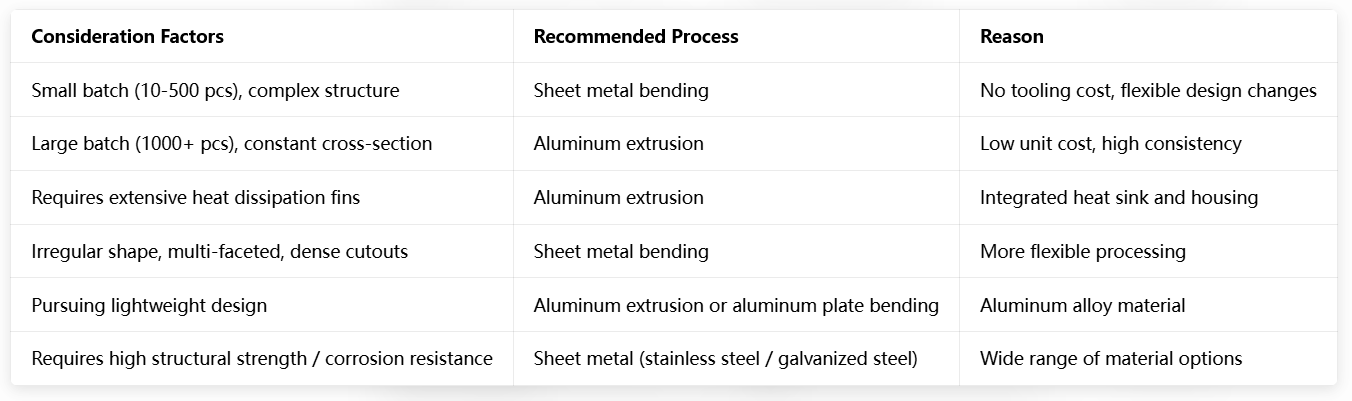
Customization Policy: No minimum order quantity requirement
Minimum Order Quantity: 1 piece of sheet metal, 100 meters of extrusion piece (can be mixed lengths)
Sampling Cycle: Sheet metal 3-7 days, Extrusion mold making 2-3 weeks
Sampling Fee Policy: Can be deducted after confirming the batch order
Design Support: Engineers can assist in optimizing the structure, reducing processing costs or improving appearance
Cooperation Process (Five Steps)
Send drawings/requirements: Provide drawings (CAD/PDF/STEP) or describe the product application scenario
Evaluation: Reply with process suggestions + quotation + delivery date within 24 hours
Sampling: Arrange sampling after confirmation
Confirmation: Sign the mass production contract after the sample is qualified
Delivery: Include test reports, pack and ship

Copyright © 2024 by Xiamen Tongchengjianhui Industry & Trade Co., Ltd. - Privacy policy
