
After years in B2B manufacturing, I’ve become convinced of one thing: what precision machining customers truly fear isn’t the price — it’s the gamble.
This article isn’t about machines, and it won’t list specifications. It’s about the complete closed loop of a real project: the customer’s original problem, our re-engineering solution, and the final numbers.
In the fall of 2024, D Company (name changed), an automation equipment manufacturer in the US Midwest, reached out to us.
Their purchasing director emailed us through our website with a note I still remember:
“We’ve been burned twice. Show me your process, not your price.”
Here’s what happened:
The project centered on CNC Machining for Enclosures for automation equipment. One of the key components was supplied by their previous vendor. The unit price was genuinely cheap — nearly 20% below market. But the problems piled up fast:
The purchasing director did the math: the 20% saved on unit price was paid back three times over in downtime, rework hours, and cross-timezone engineering back-and-forth.
The drawings landed with our in-house team of Chinese engineers — process, quality, and assembly under one roof, with every review done inside our own workshop. Nothing outsourced, nothing handed off.
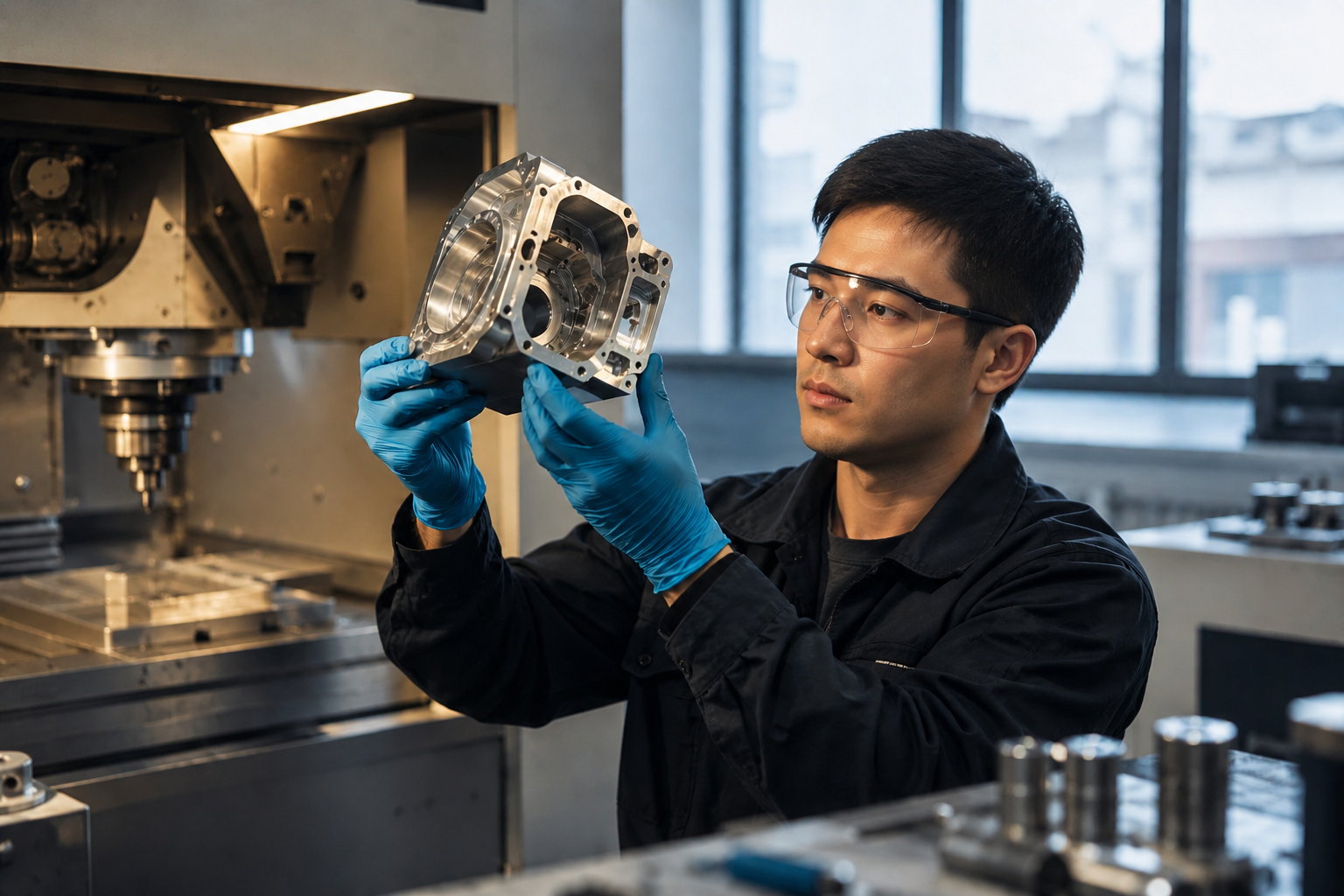
After receiving the drawings, the first thing we did wasn’t pricing. It was a DFM (Design for Manufacturing) review — the most underrated step in High Precision CNC Machining.
Three days later, we sent back an 11-page DFM report. Not a single line about how great our machines are. Just four findings:
We’ve always been clear: a DFM report is free, but it’s the true prerequisite to a quotation.
Without it, a quote is just a number. With it, a quote is a commitment.
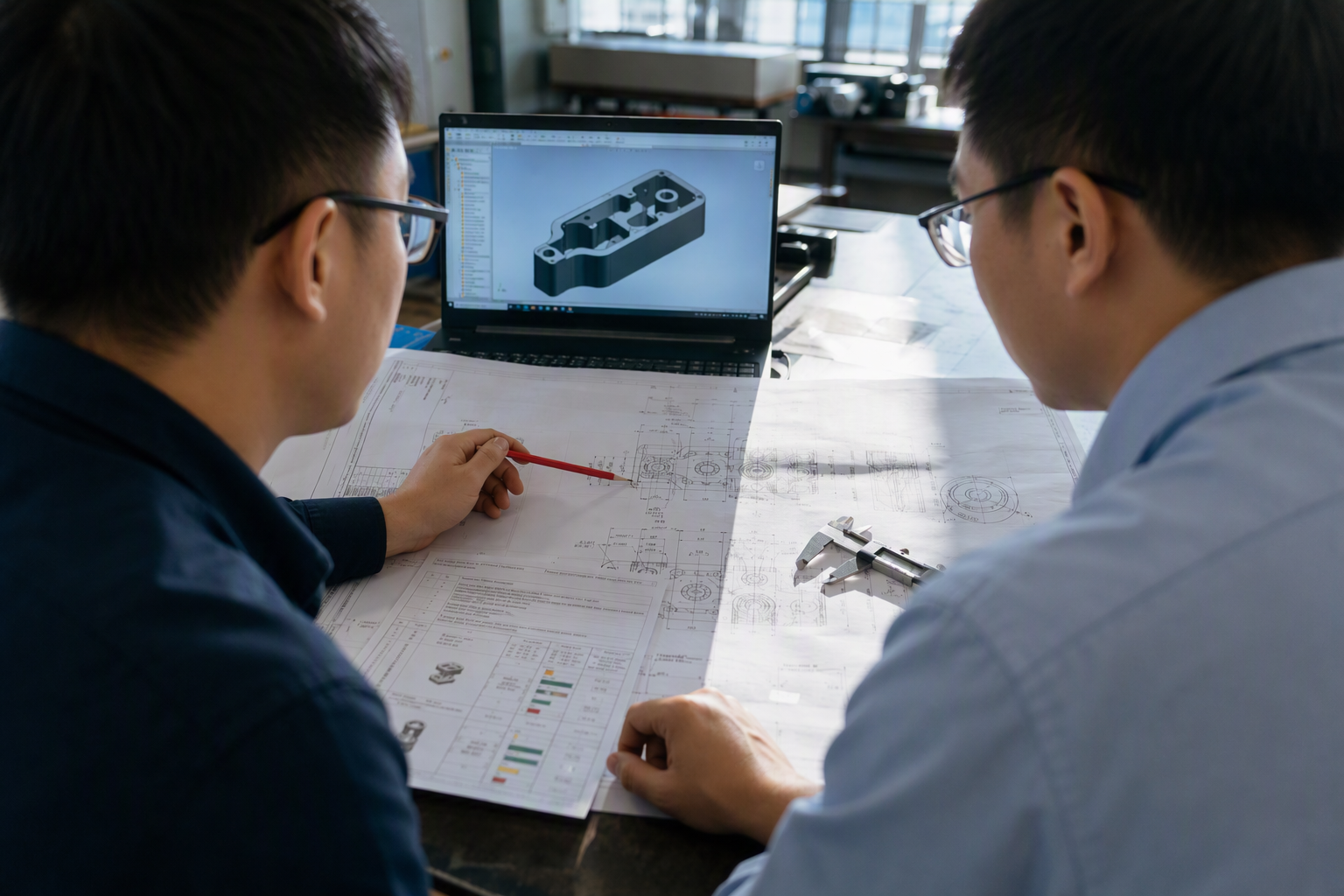
Once the project was confirmed, we did four things — each one mapped to a specific concern of the customer when sourcing custom CNC machining parts:
Customer’s Concern |
What We Did |
Is the precision consistent? |
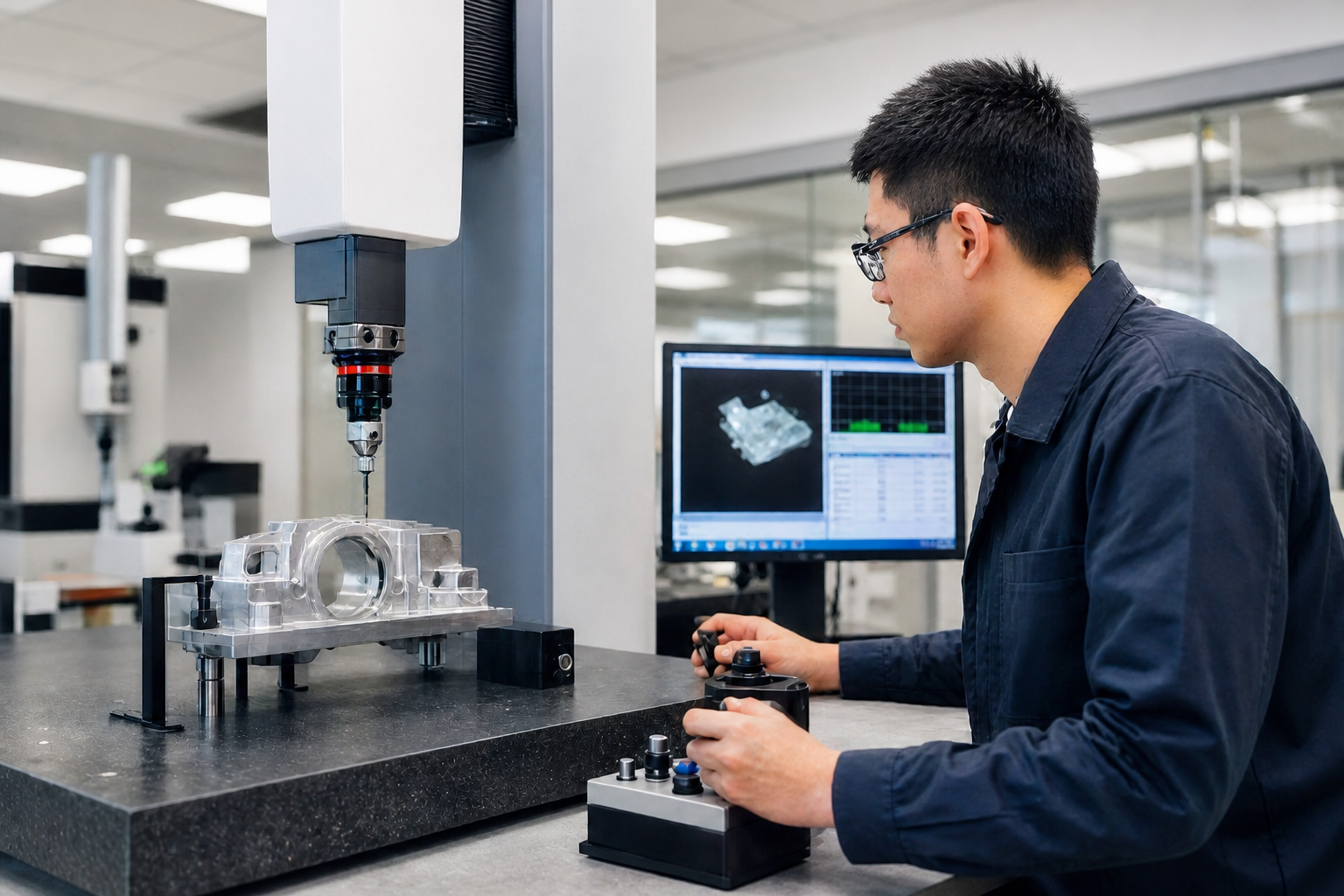
Full FAI first-article inspection + CMM reports shipped with every delivery; CPK data included with each batch; critical tolerances held steadily at ±0.02mm (spec: ±0.05mm) |
Is the lead time reliable? |
Production slots locked upon order confirmation; photos/videos at key milestones (raw material, first article, surface finishing, packaging); weekly progress snapshots |
Can costs be optimized? |
Cost reduction through process optimization (extruded profile + finish machining) — not by discounting, but by saving material, machining hours, and scrap |
Are certifications in order? |
ISO 9001 system, MTC material certificates, and RoHS declarations shipped complete — passes customer supplier audits |
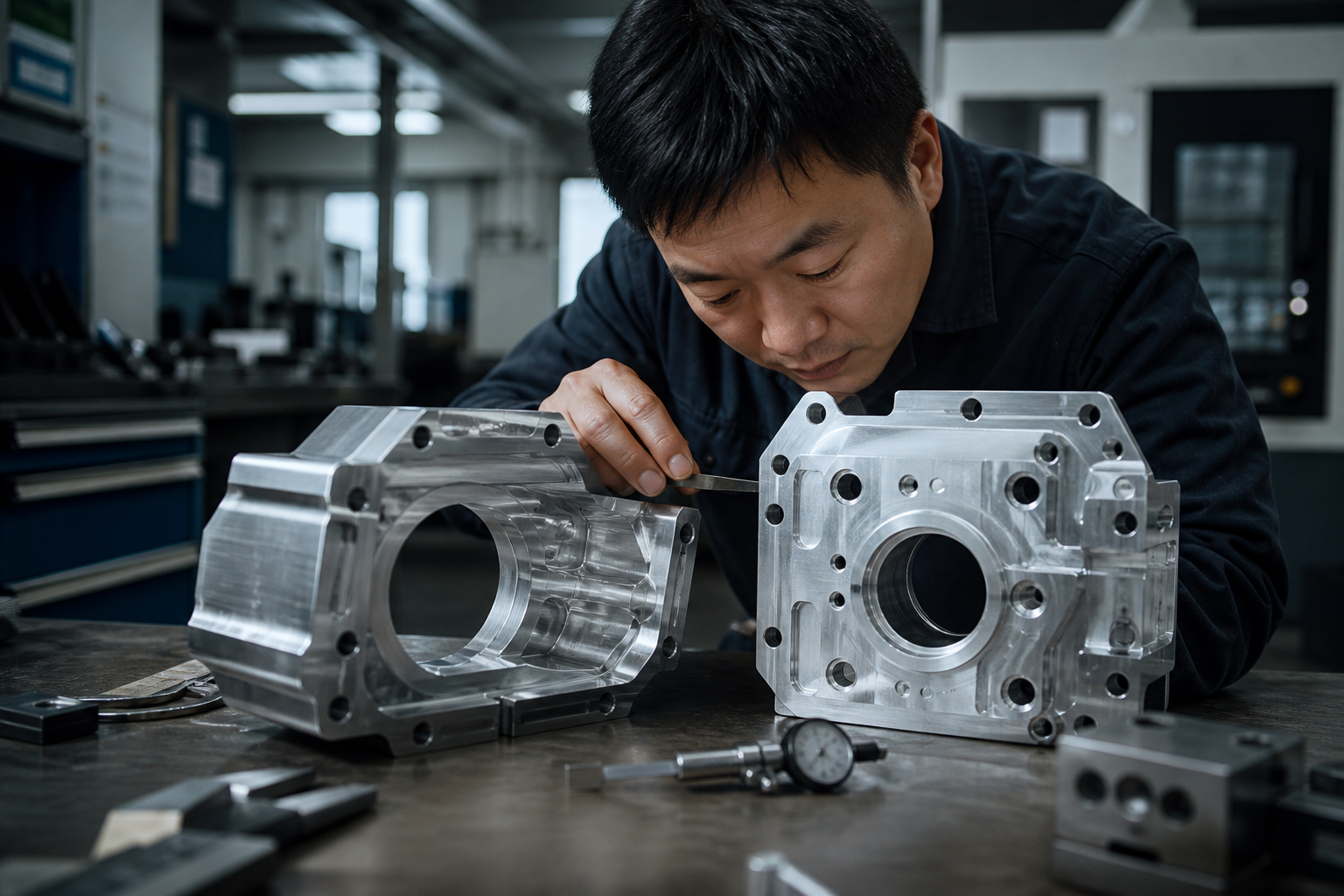
After the first batch was delivered, D Company’s purchasing director sent an email. I’ll quote just one line:
“This is the first time in two years we received parts that fit the first time.”
The numbers (first order, 1,000 pieces):
Metric |
Previous Supplier |
Us |
Batch scrap rate |
12% |
0.3% |
Critical tolerance stability |
±0.08mm (fluctuating) |
±0.02–0.03mm (CPK 1.67) |
Delivery lead time |
45 days (with delays) |
28 days (incl. sea freight, consistently met) |
Total cost |
Baseline |
−18% (process optimization, not price cutting) |
Process documentation |
None |
FAI + CMM reports with every shipment, fully traceable |
Six months later, D Company added us to the approved vendor list for two new equipment platforms — a quiet endorsement of our CNC metal fabrication for automation equipment capability. The drawings arrive, and we skip the “trial phase” entirely.
I keep telling my team:
When B2B customers read a case study, they’re never looking at machine specifications. They’re asking three questions — Will you make me gamble again? Who covers me if it goes wrong? And can it be cheaper, faster, and more stable next time?
That’s why our case studies never say “we own this many 5-axis machines.” They say:
If you’re evaluating OEM CNC machining services and have a drawing that “no one dared to take” — or one that was taken but never done right —
send it to us. Within 48 hours, you’ll get a DFM review and a quotation with substance behind it.

Copyright © 2024 by Xiamen Tongchengjianhui Industry & Trade Co., Ltd. - Privacy policy
