
Title: Custom Aluminum Housing Manufacturer | CNC & Extrusion Enclosures — Xiamen Tongchengjianhui
Description: Struggling with aluminum housings that warp, interfere, or overheat? Get custom aluminum enclosures with DFM-driven precision, CNC milling, and OEM China efficiency.
Keywords: aluminum housing, aluminum enclosure, aluminum housing manufacturer, custom aluminum enclosure, CNC aluminum housing, 5G aluminum enclosure, aluminum extrusion enclosure, OEM aluminum enclosure China
It is the quietest failure mode in hardware manufacturing: a 3D model passes every digital check, yet when the first aluminum housing arrives, screws bottom out against internal components, sidewalls flex under finger pressure, and assembly takes twice as long as budgeted. The enclosure looks right — it just does not work right.
At Xiamen Tongchengjianhui Industry & Trade Co., Ltd., we have spent over a decade collecting these failure modes from real installation feedback. What follows is not a catalog — it is a guide to getting aluminum housings right the first time.
Pain Point |
What Happens |
Root Cause |
Mechanical Interference |
Foot screw holes overlap with inner component space; screws cannot fully lock. |
3D model ignores physical assembly sequence. |
Structural Deformation |
Sidewalls flex visibly; drop-test failures. |
Wall thickness sacrificed for weight reduction without reinforcement. |
Thermal Bottleneck |
Device throttles performance under load. |
Flat internal surfaces — no integrated cooling geometry. |
Fastener Chaos |
Mixed M3/M4 screws, inconsistent lengths, excessive visible fasteners. |
No BOM standardization; assembly designed for CAD, not for people. |
Each of these is avoidable — if your supplier treats DFM (Design for Manufacturing) as a core service, not an afterthought.
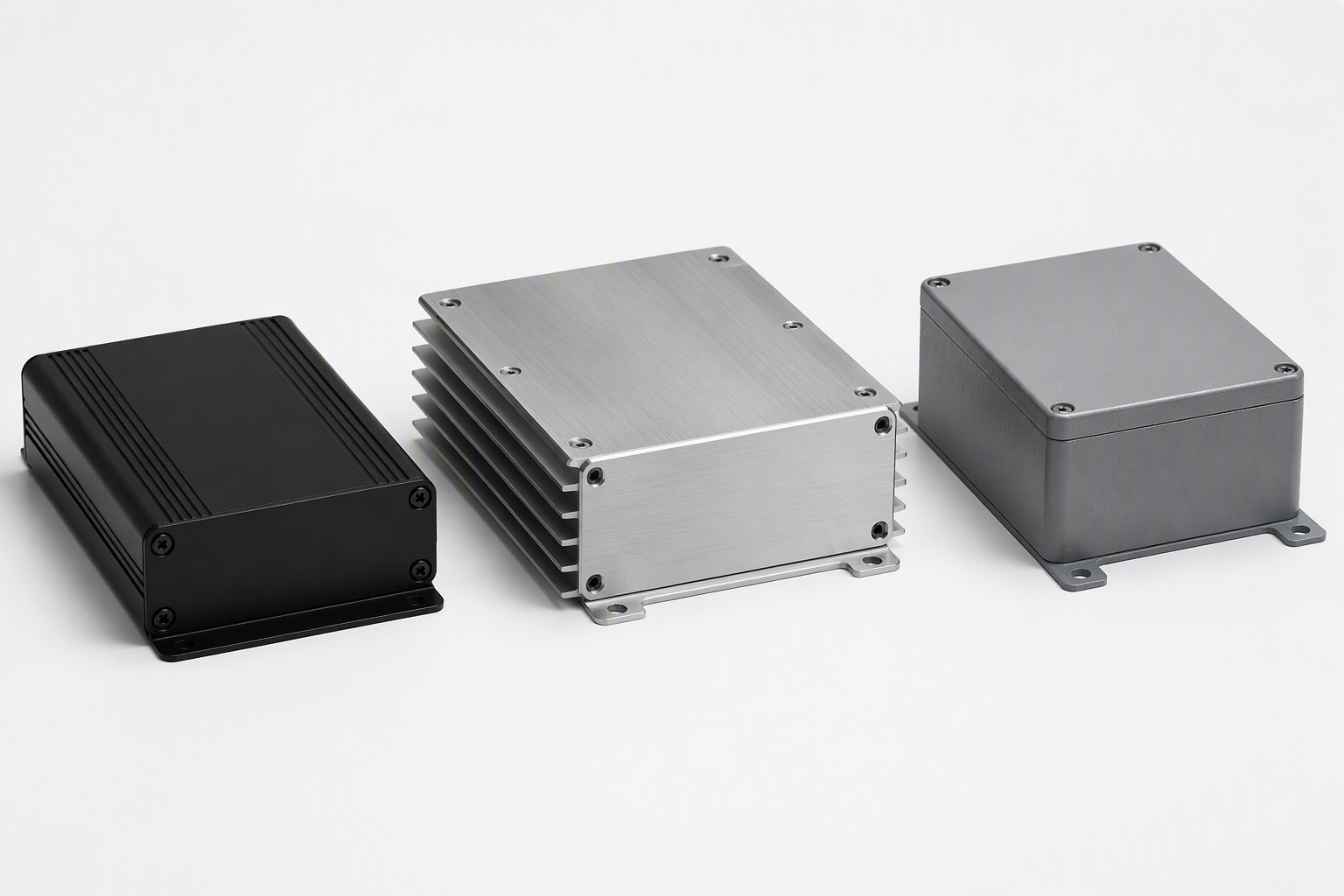
Not every aluminum housing needs a 5-axis CNC. Not every batch benefits from extrusion. The key is matching the process to the product stage and purpose.
Process |
Material |
Best For |
Tolerance |
Batch Size |
CNC Milling |
6061, 7075, 5052 |
Prototypes, 5G enclosures, precision instruments, cooling fins |
±0.01 mm |
1–5,000 |
Extrusion |
6063, 6061, 6005 |
PCB boxes, LED housings, power supply shells, standard profiles |
±0.10 mm |
500–100,000+ |
Die Casting |
ADC12, A380, AlSi12 |
Amplifier chassis, inverter housings, junction boxes, high-volume runs |
±0.05 mm |
5,000+ |
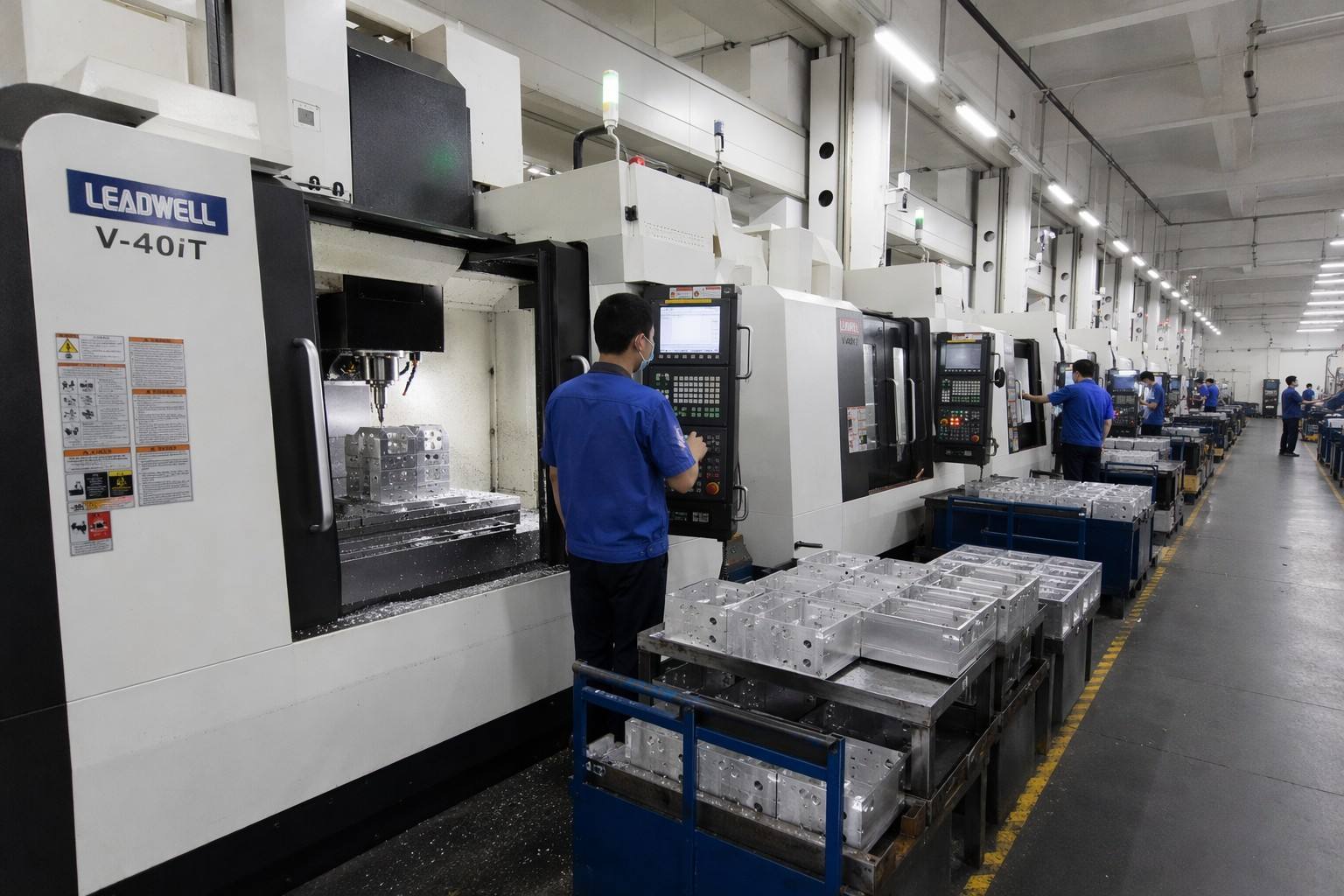
We operate extrusion lines and CNC machining centers in-house. No handoff between factories. No tolerance mismatch. One engineering file flows from prototype to mass production without translation errors.
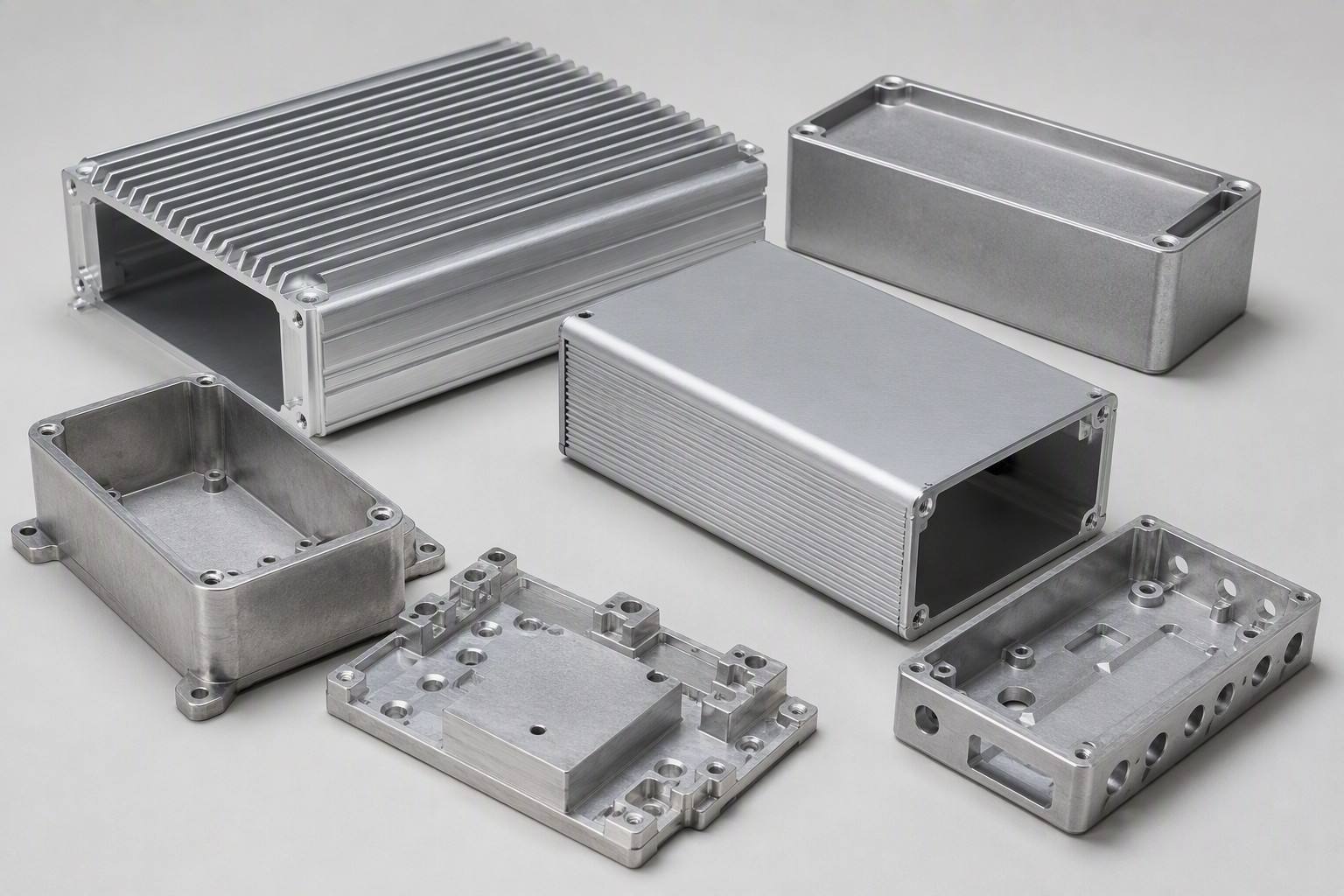
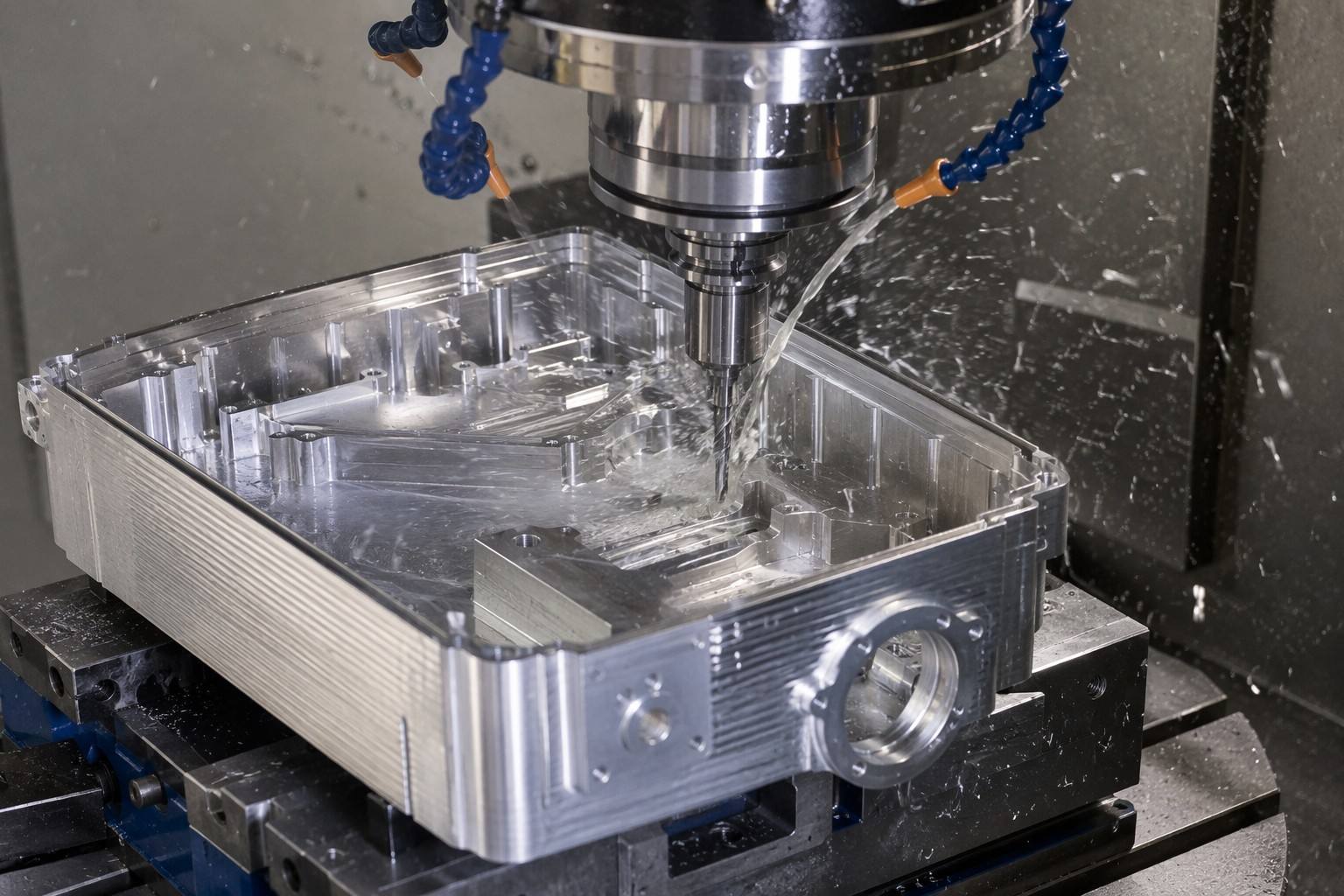
5G base stations and high-performance computing terminals impose three simultaneous demands on aluminum housings: signal integrity (no unintended shielding gaps), thermal dissipation (heat loads exceeding 100W in compact volumes), and micron-level fit tolerances.
CNC milling is the only process that delivers all three. Consider the interference problem from Section I — foot screw holes overlapping internal space:
Through CNC milling, we machine stepped limit platforms directly inside the housing. Instead of relying on flat internal surfaces that force components into conflict with fasteners, we create multi-level internal geometry that routes clearance exactly where it is needed. The result: screws lock fully, components sit flush, and the 3D model now matches reality.
For thermal management, CNC milling enables integrated cooling fin arrays — not bolt-on heatsinks that add assembly steps and thermal interface resistance, but continuous aluminum geometry from housing wall to fin tip. These structures are machined from a single billet of 6061 or 7075 aluminum, eliminating thermal junction losses entirely.
The feedback is consistent across projects: enclosures have too many visible screws, too many screw types, and assembly takes too long. Our answer: custom aluminum stamping clips as a replacement for traditional screw-locking in non-structural positions.
Before |
After |
Impact |
12× M3 (8mm+10mm mixed), 8× M4 (12mm+16mm mixed) per unit |
4× standardized M3 + snap-lock aluminum clips for covers and cable management |
Visible fasteners: 20 → 4 |
6.5 minutes assembly per unit |
2.8 minutes assembly per unit |
Assembly time reduced by 57% |
The stamping process produces these clips at high volume with tight dimensional consistency. Combined with a standardized fastener BOM — all M3 screws at a single length, all M4 screws at a single length — the reduction in assembly complexity is immediate and measurable.
When sidewall deformation is flagged in installation feedback, the instinct is to increase wall thickness. That adds weight, material cost, and shipping cost.
Our approach: integrated L-shaped reinforcement geometry, milled directly into the housing interior or added as precision-fit aluminum inserts. In one recent project, a 1.2mm-sidewall aluminum enclosure that failed the 50kg compression test was redesigned with CNC-machined internal ribs and custom aluminum reinforcement brackets — the final unit passed 80kg compression testing with only an 8% weight increase over the original.
Assembly Issue |
Technical Solution |
Process |
Screw hole interference |
CNC-milled stepped limit platforms and clearance slots |
CNC Milling (6061/7075) |
Low welding alignment quality |
Integrated limit slots in cylindrical contact surfaces |
CNC Milling + Precision machining |
Sidewall structural deformation |
Internally milled reinforcement ribs or press-fit aluminum L-brackets |
CNC Milling / Extrusion secondary |
Excessive visible fasteners |
Snap-lock aluminum stamping clips replacing screw-locked panels |
Custom Aluminum Stamping |
Fastener BOM complexity |
Standardize M3/M4 to single lengths; unify locking direction |
DFM consultation + OEM BOM optimization |
Thermal throttling under load |
Integrated cooling fin arrays machined from single billet |
CNC Milling (6061/7075) |
A Middle Eastern telecom contractor required outdoor base station power module housings: lightweight, IP65-rated, corrosion-resistant, and thermally capable of dissipating 80W continuous. Our solution: 6063-T5 extruded aluminum housing with CNC-machined cooling fins and hard anodized finish. 500-hour salt spray test passed. Deployed across 200+ sites.

A European systems integrator needed IP54-rated aluminum junction boxes with custom cutouts and EMC gasket grooves for a factory automation retrofit. Supplied 10,000 extrusion housings over 4 months, each with CNC-machined openings, powder-coated to RAL 7035, and delivered with full dimensional inspection reports. Zero line rejects.
The global aluminum die casting market reached USD 86.1 billion in 2025 (Grand View Research), driven largely by EV and renewable energy demand. Our ADC12 die-cast aluminum charger enclosures combine EMI shielding, IP65 sealing, and thermal management in a single integrated part — no multi-part assembly, no gasket glue, no compromise.

Three things distinguish a true DFM partner from a parts processor:
1. We begin where your 3D file ends. When you send a STEP file, we do not just quote it — we review it. Interference points. Thin-wall risks. Fastener standardization opportunities. You get a DFM report alongside the quote, not after the first sample fails.
2. We own the process chain. Extrusion, CNC milling, stamping, surface treatment, assembly — all in-house. When the project scales from 50 prototype units to 50,000 production units, the process doesn't change hands; it changes cadence.
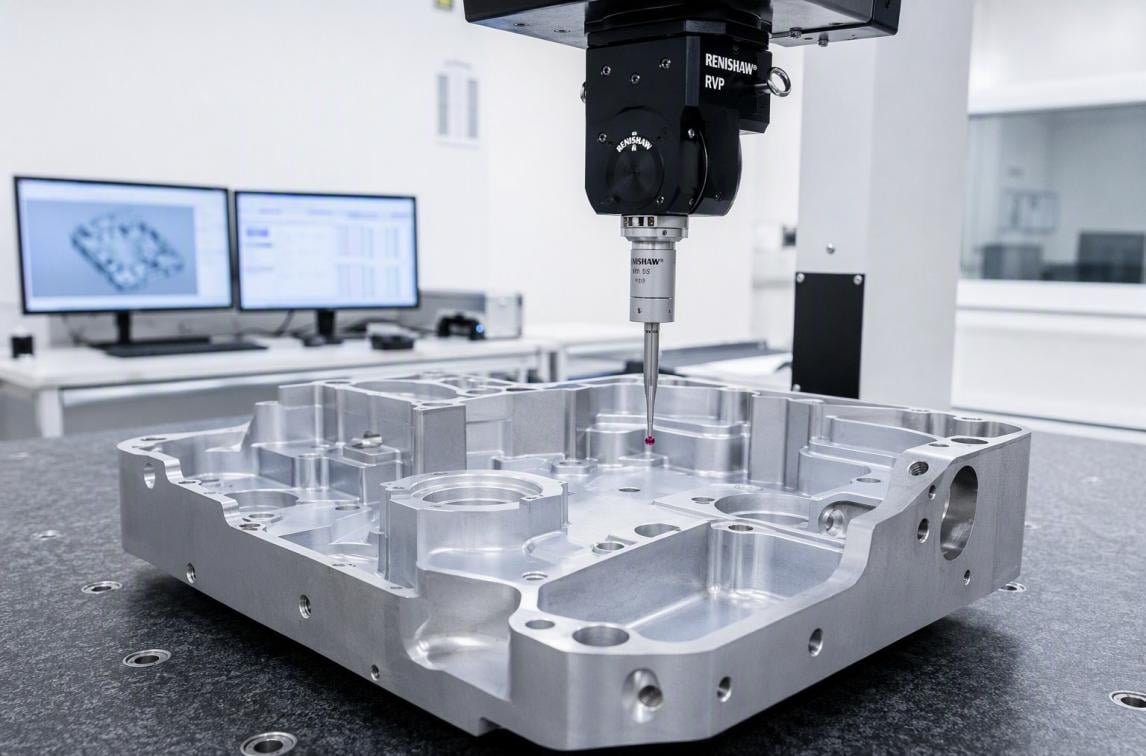
3. We document everything. Every shipment includes mill test certificates (EN 10204 3.1), CMM inspection reports, surface treatment test data, and RoHS/REACH compliance declarations. When you request third-party inspection through SGS or Bureau Veritas, our records are ready.
Whether you are holding a 3D file ready for DFM review, or staring at a failed first sample from another supplier wondering what went wrong — send it to us.
You send:
• STEP / IGES / STL file (or a sketch with dimensions)
• Target quantity and budget range
• Any certification or surface finish requirements
You receive within 24 hours:
• Unit price + tooling cost (if applicable)
• DFM feedback with specific optimization suggestions
• Confirmed lead time

Copyright © 2024 by Xiamen Tongchengjianhui Industry & Trade Co., Ltd. - Privacy policy
