Home > Products > Aluminum Extrusion Enclosure > IPC Chassis
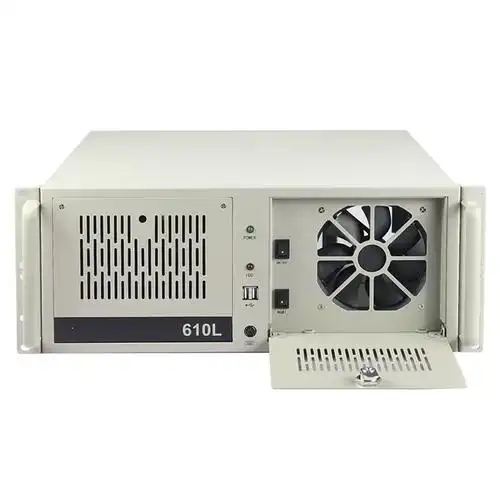
We carry out sheet metal IPC chassis fabrication for industrial computer builders, system integrators and OEM hardware brands — 1U to 6U rackmount enclosures, wall-mount boxes, desktop cases and card-cage frames, in galvanised steel, SECC, aluminium or stainless. Our plants in xiamen cover 23,000 m² with around 130 machines, and we have been shipping fabricated enclosures to 35 countries since 2005. Cutting, bending, welding, hardware insertion, coating and assembly sit under one roof, so a chassis drawing moves from flat sheet to a packed unit without leaving the building. The motherboard, backplane, power supply and compliance testing of the finished system stay with the customer; the enclosure is ours.
| Material available | SGCC galvanised steel, SECC, 5052 / 6061 aluminium, 304 stainless — as specified on drawing |
| Sheet thickness | 0.8–2.5 mm for chassis panels; 1.0–12 mm for brackets and heavier parts |
| Rack profile | 19-inch EIA-310 width, 1U–6U heights, depth per drawing |
| Tolerance | Bend ±0.1 mm, hole pitch ±0.2 mm, machining ±0.01 mm |
| Structure | Laser cut, CNC bent, spot / MIG welded in fixture, PEM standoffs and rivet nuts pressed, tapped holes |
| Surface finish | Powder coating 60–120 μm (textured, matt, satin), zinc plating, anodising, silkscreen or laser marking |
| Features formed in | Vent and slot patterns, fan and filter cutouts, I/O and PCIe openings, gasket grooves, grounding studs, cable entries |
| Packing & MOQ | Foam-lined carton or plywood case; sample from 1 pc in 3–7 working days, batch 15–20 working days |
An IPC chassis is a tolerance stack before it is a box. The 19-inch width has to clear the rack rails, the 1U pitch has to line up with the unit above it, the front panel has to sit flat against a gasket, and the board standoffs have to land on the holes in the motherboard. Any one of those drifts and the integrator finds it during assembly, not during goods-in. So the frame is welded in fixture and checked diagonally before coating, front panels are formed and flattened as a pair with the body, and standoff positions are checked against the drawing rather than against the previous order.
Thin panels are where sheet metal IPC chassis fabrication usually goes wrong. At 1.0–1.2 mm, a continuous weld pulls the side panel into a bow, and the slide-in card cage no longer runs true. We use stitch and spot welding with a planned sequence, keep heat away from the front aperture, and flatten the assembly while it is still warm. Edges are radiused by vibratory finishing, tapped holes are cleaned after coating, and mating faces are masked so 80 μm of powder does not close a 0.5 mm gap.
Rackmount enclosures in 1U, 2U, 3U, 4U and 6U; wall-mount and pole-mount cabinets for factory floors; desktop and benchtop cases; card-cage and backplane frames; front panels, rear panels and blanking plates; internal brackets, drive cages and PSU mounts. Every dimension, cutout and hole pattern comes from the customer's drawing. Where a bend radius, slot pitch or standoff position will not form or coat cleanly, we raise a DFM note before quoting instead of discovering it at first article.
The 19-inch width, the U pitch and the panel-to-body relationship are measured against your drawing and checked diagonally before coating. A chassis that misses the rack by half a millimetre is scrap, whatever the surface looks like.
Stitch and spot welding with a planned sequence, fixture-held assembly, and flattening while the part is warm. Card cages slide in true because the side panels stayed where the fixture put them.
Fan cutouts, slot patterns, gasket grooves and grounding points are cut and formed in the same operation as the panels, not added afterwards. Gasket grooves are dimensioned to the profile you specify, and the EMI performance of the assembled system stays with the integrator.
PEM standoffs, rivet nuts and tapped holes are installed before coating, cleaned after it, and checked for pull-out and thread condition. Hardware kits are bagged and labelled by assembly step so your line does not sort screws.
A sample from one piece in three to seven working days, batch production in fifteen to twenty working days after approval. No trading layer, no container minimum, and drawings can be covered by an NDA before they are shared.
These enclosures go into industrial control cabinets, machine vision systems, edge computing nodes, network appliances, test and measurement racks, kiosks and laboratory instruments. Customers are industrial PC builders, system integrators, automation distributors and hardware brands that assemble or private-label the finished unit. Because every chassis is drawn rather than catalogued, the same line runs a 1U network appliance and a 6U card-cage frame without a tooling change, and a repeat order is checked against the same drawing that produced the first.
We quote from the drawing and build to it, with in-process patrol and full inspection on visible surfaces before packing. Documents travel with the goods, so an incoming inspection can be completed before the carton is opened. We hold ISO 9001:2015, CE and RoHS, our factory is SGS-audited, and we have supplied fabricated metal parts to 35 countries since 2005.
Contact us with your chassis drawing, material, thickness, finish and quantity — you will receive a DFM note and a quotation within 24 hours on working days.
Do you fabricate the complete chassis, or only the sheet metal parts?
We fabricate the enclosure: body, front and rear panels, internal brackets, drive cages, PSU mounts and blanking plates. Motherboards, backplanes, power supplies, fans and the compliance testing of the assembled system stay with you. Where a drawing calls for EMI gaskets or grounding hardware, we fit them, but the EMI performance of the finished unit is the integrator's scope.
Can you fabricate to 19-inch EIA-310 rack dimensions?
Yes. Width, U pitch, depth and rail mounting positions are taken from your drawing and checked before coating. If you send the rack rail specification as well, we check the clearance stack rather than only the nominal width.
How do you control distortion on 1.0 mm panels?
Stitch and spot welding with a planned sequence, fixture-held assembly and flattening while the part is warm, followed by diagonal measurement. Continuous welding on thin panels is avoided unless the drawing requires it, because the heat input is what pulls a side panel out of true.
What is the minimum order and lead time?
One piece for a sample, three to seven working days. Batch production runs fifteen to twenty working days after approval. There is no container minimum, and no mould fee for parts cut from sheet.
What documents ship with the goods?
Material certificate, dimensional report, first article inspection and coating thickness readings, plus salt spray results where the project specifies them. They travel with the shipment so an incoming inspection can be completed before unpacking.
How are painted chassis packed for export?
Foam-lined cartons with painted faces protected by PE film and corner guards, or export plywood cases on pallets for larger frames. Hardware is bagged and labelled by assembly step, and a loading plan is issued for each model before the order is placed.
Can you mark the front panel with our logo and port legends?
Yes — silkscreen or laser marking, positioned from your artwork file. Marking is applied after coating, and the legend alignment is checked against the panel datum on the first article.
Will you sign an NDA, and do you sell under your own brand?
Yes to the NDA, before drawings are shared. No to the second: we do not run a finished IPC brand or any product that competes with the customers we build for.

Copyright © 2024 by Xiamen Tongchengjianhui Industry & Trade Co., Ltd. - Privacy policy