Home > Products > Aluminum Extrusion Enclosure > Energy Storage System Housing
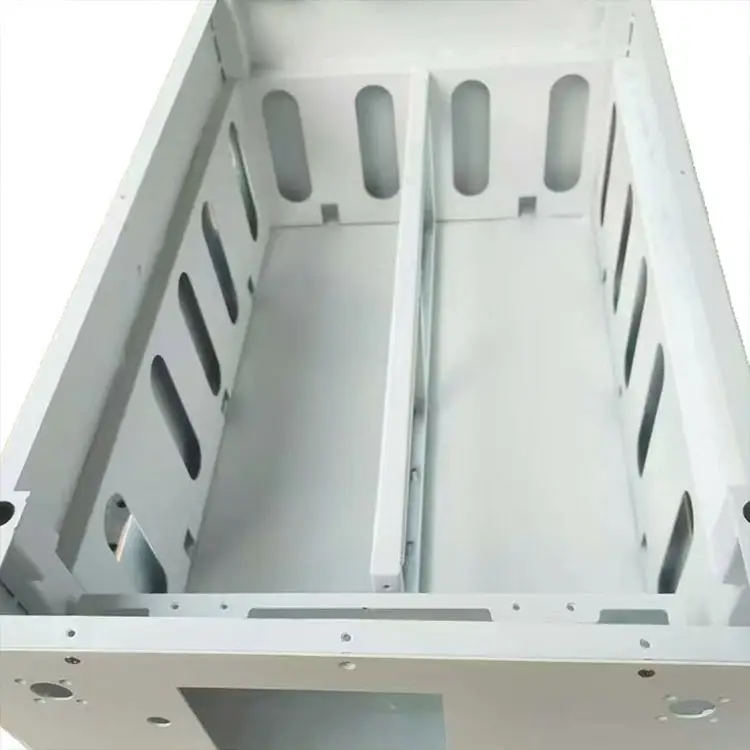
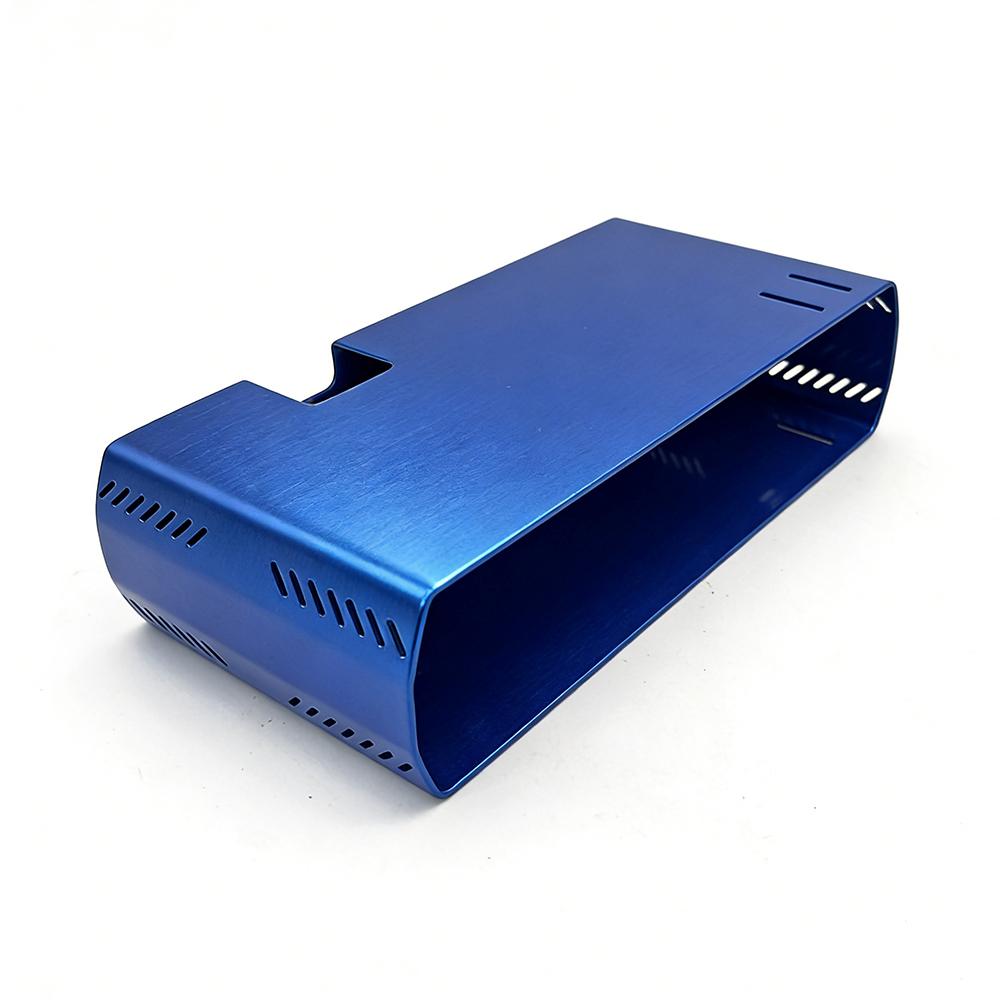
We manufacture energy storage system enclosures for battery pack assemblers, BESS integrators and OEM energy brands — die-cast aluminium housings with integrated ribs, threaded bosses, a machined gasket groove and cast-in cable entry ports. The housing arrives machined, finished and ready for the pack: sealing face milled flat, threads cut and checked, mounting interfaces held to the drawing. Our plants in Shenzhen and Dongguan run cutting, machining, finishing and inspection under one roof, and we have been supplying metal enclosures to 35 countries since 2005. Cells, BMS, busbars and the certification of the assembled pack stay with the customer; the enclosure is ours.
| Material | ADC12 / A380 die-cast aluminium; 6061-T6 machined for prototypes and low volume |
| Wall and structure | 2.5–4 mm walls, ribs and bosses cast integral — no welded studs to leak |
| Sealing | Gasket groove machined to the profile you specify, sealing face flatness 0.1 mm, air leak test per drawing |
| Machining | CNC face milling, M3–M8 tapped bosses, dowel and locating holes, ±0.05 mm |
| Cable entry | M12 / M16 / M20 threaded ports, connector cutouts, breather valve seat cast in place |
| Finish | Chromate conversion, powder coating, anodising; salt spray hours per project |
| Assembly features | Grounding stud, mounting flanges, lifting points, thread inserts |
| MOQ and lead time | Machined sample from 1 pc in 3–7 working days; die-cast batch 15–20 working days after tooling approval |
An energy storage enclosure is judged by one line of contact: the gasket groove. The casting can be sound everywhere else and still fail a leak test if the sealing face is not machined after casting, because a cast skin carries draft, shrinkage and die wear into the joint. So the groove is milled, not cast to size, and the face is checked on the CMM before the housing moves to finishing. Wall thickness is kept between 2.5 and 4 mm with ribs placed against the pressure and the mounting points, which holds the section stiff without adding mass the pack has to carry.
Cast-in features are what separate a production-ready housing from a box that needs rework. Threaded bosses for the BMS bracket, the busbar standoffs and the cover screws are cast as bosses and then tapped, so there is no welded stud to work loose or leak. Cable entry ports are cast with material around them and threaded afterwards, which keeps the wall thickness at the thread where a drilled hole would thin it. Mounting flanges, lifting points and the grounding stud land in the same casting, and the machining programme references them from one datum so the cover, the pack and the cabinet all line up.
Residential battery wall units and floor-standing cabinets; commercial and industrial BESS modules; telecom backup enclosures; marine and off-grid battery boxes; charging buffer packs; cover plates and end plates for the same families. Enclosures are made to the customer's 3D model and 2D drawing, in die-cast aluminium where volume justifies tooling and in machined 6061 where it does not. Where a rib, boss or port position will not fill or eject cleanly, we raise it at DFM stage — before the tool is cut, not after the first samples.
A groove cast to final size will leak at the third assembly. Milling after casting removes draft and die wear from the joint, and the flatness is measured rather than assumed.
Threaded bosses are formed with the casting and tapped afterwards. There is no weld seam to porosity-test, no stud to work loose under vibration, and no extra operation in your incoming inspection.
Ports are cast with a thickened section and threaded after machining, so the thread sits in full wall thickness. Drilling a thin wall is how a leak path starts at the gland.
Mounting flanges, lifting points and the grounding stud are machined from the same datum as the sealing face, so the cover gasket and the rack interface share a reference instead of chasing tolerance.
A machined 6061 housing from one piece in three to seven working days lets you test fit, seal and thermal path before committing to a die. Tooling drawings, sample approval and batch production follow the same file.
These housings are used in residential energy storage, commercial and industrial battery cabinets, telecom site backup, marine and off-grid systems, and buffer packs for charging infrastructure. Customers are pack assemblers, BESS integrators, energy brands and contract manufacturers who need the enclosure to arrive ready for cells and BMS rather than as a fabrication project. Because the housing is made to a model rather than a catalogue, the same programme covers a wall unit and a 19-inch module frame, and a repeat order is inspected against the drawing that produced the first article.
We quote from the model and the drawing, machine to the datum you specify, and ship with dimensional and leak records so incoming inspection can close before the carton is unpacked. We hold ISO 9001:2015, CE and RoHS, our factory is SGS-audited, and we have supplied metal enclosures to 35 countries since 2005.
Send the 3D model, alloy, surface requirement and annual quantity — you will receive a DFM note covering draft, wall thickness and port positions, with a quotation, within 24 hours on working days.
Do you supply the enclosure only, or the assembled battery pack?
The enclosure only: housing, cover, machined interfaces and installed hardware. Cells, BMS, busbars, harnesses and pack-level certification stay with you. If the drawing calls for thread inserts, grounding hardware or a breather valve seat, those are part of our scope.
Which alloy and process do you use?
ADC12 or A380 for die-cast production, and 6061-T6 machined from billet for prototypes and low volume. The choice usually follows annual quantity and wall thickness: a thin-walled housing with deep ribs is a casting, a short run is machined.
Can you achieve IP67 on this housing?
The rating is achieved by the assembly, not by the housing alone. What we control is the machined groove, the sealing face flatness and the port threads; we air-test the empty housing to the pressure on your drawing and record the result, and the final IP test is done on the assembled unit.
How do you hold the sealing face flat after casting?
The face and the groove are milled after casting, in one set-up with the mounting datum, then measured on the CMM. Casting skin is never used as a sealing surface, because draft and die wear put it outside the flatness a gasket needs.
What is the tooling lead time, and who owns the tool?
A die typically takes four to six weeks from approved DFM to first samples; machined prototypes run three to seven working days and can be made before the tool is cut. Tool ownership and maintenance are agreed in the quotation.
How strong are the threaded bosses?
Bosses are cast with a wall around the thread and tapped after machining, then checked for thread depth and pull-out on the first article and by sampling in production. Where a boss carries load, we will show the section at DFM rather than discover it at assembly.
What surface finishes and corrosion performance do you offer?
Chromate conversion as the base for die-cast aluminium, then powder coating or anodising as specified; salt spray hours are agreed per project rather than quoted as a fixed figure. Colour is held to ΔE < 1 with a physical sample retained per batch.
What is the minimum order and how fast is a batch?
A machined sample from one piece in three to seven working days. Die-cast production runs fifteen to twenty working days after tooling approval, with no container minimum.

Copyright © 2024 by Xiamen Tongchengjianhui Industry & Trade Co., Ltd. - Privacy policy